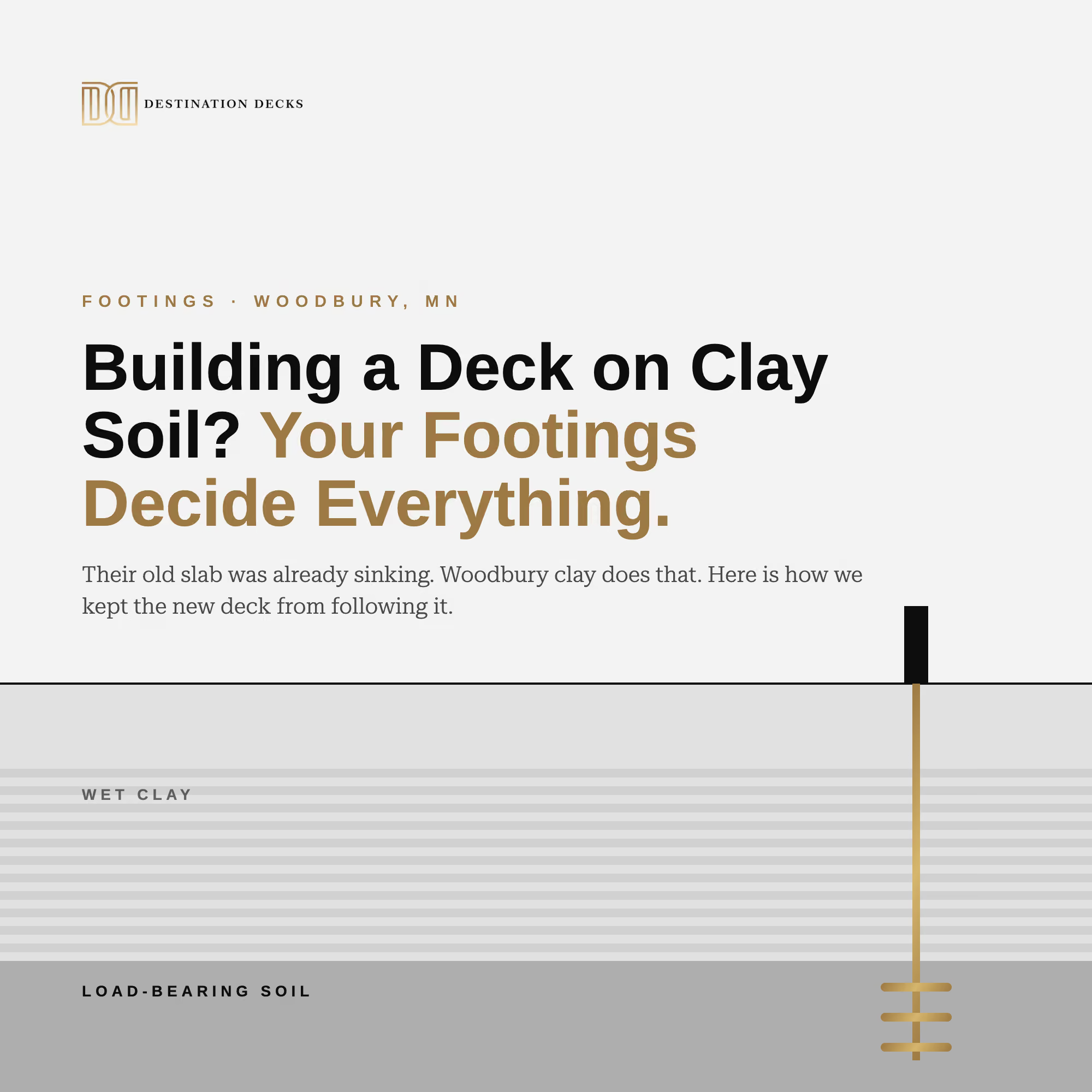
Building a Deck on Clay Soil? Your Footings Decide Everything.


Over the past few years, we've worked with many clients in the Woodbury area. And because we have worked extensively in Woodbury neighborhoods, we know the quality of the soil.
If you live in a new construction neighborhood, you are probably familiar with soil settling. It's one of the main reasons many new homes develop cracks in the walls. In this particular case, the homeowners had a concrete slab patio right outside their back door that had been shifting and sinking for years.
While this blog isn't about the finer points of new home ownership, that is the first key that the soil around your house could imapct future builds. From our experience, we knew that the soil in this partiucalr negihborhood was pure clay.
And that is something every deck builder should check immediately.
Why Clay Soil Is So Hard on Decks and Patios

Much of the ground in the Stonemill area of Woodbury is almost pure clay. We've seen it on project after project we've done in this area.
Clay holds water instead of draining it. Water pools and ponds under the surface. Then Minnesota winters freeze it, and the ground swells and pushes up. In spring it thaws, softens, and settles back down. That constant heaving and sinking is what cracks slabs and tips deck posts out of level.
If your patio or steps have moved over the years, your soil is telling you something. Listen to it before you build a deck on top of it.
Why Traditional Footings Struggle in Clay
A traditional poured footing relies on digging deep and pouring a wide base, called a bell. The idea is that a bigger, deeper footing is more stable.
In heavy clay, that logic breaks down. The footing still sits in soil that holds water and moves. A bigger bell doesn't fix wet, shifting ground.
Why We Used Helical Piers
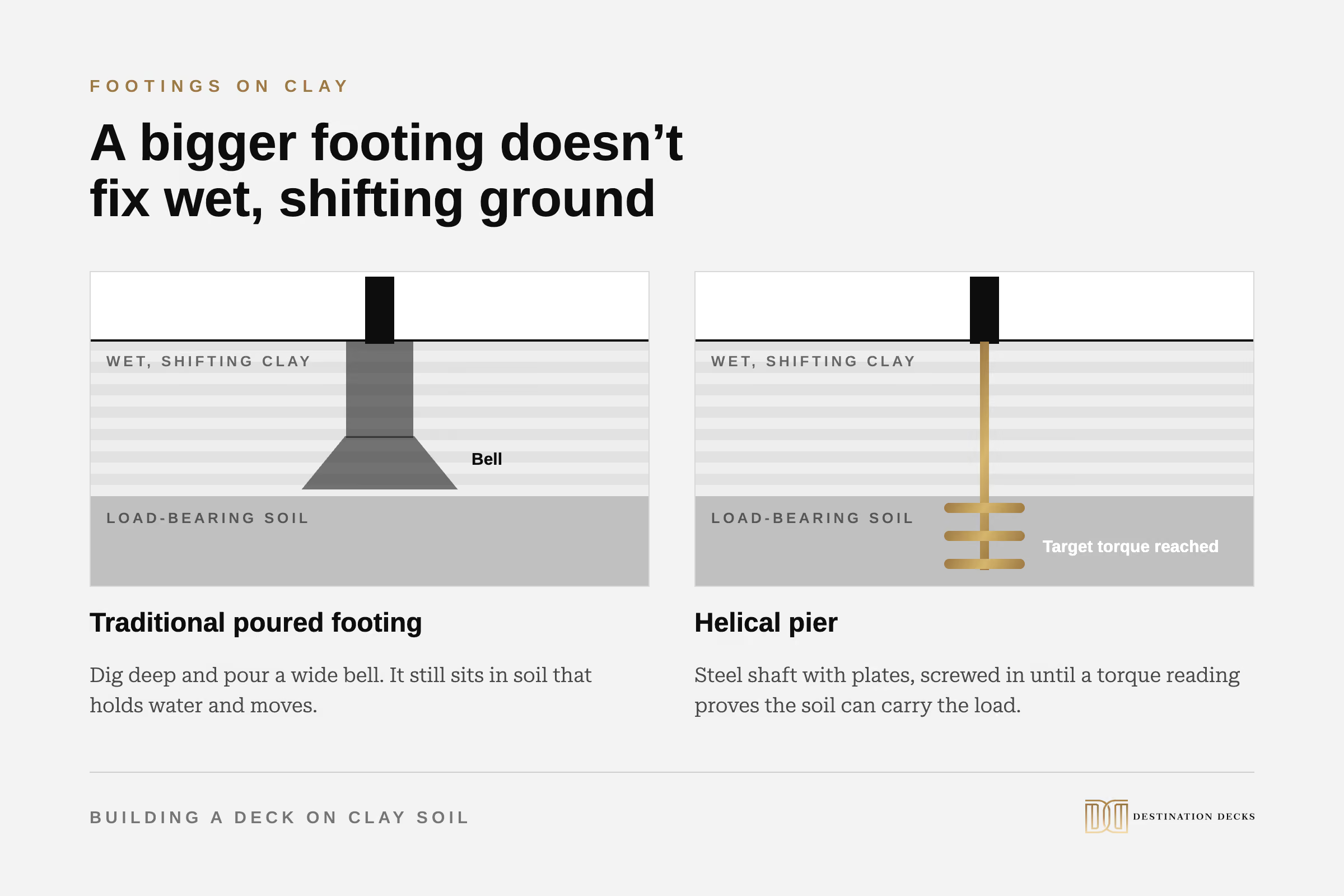
Helical piers work differently. They're steel shafts with plates that screw into the ground. The installer drives each one until it reaches a specific torque reading. That torque tells us the pier has hit soil strong enough to carry the load.
So it doesn't matter how deep it has to go or how wide a bell would have been. The pier keeps going until the ground can hold it. On clay, that's the difference between a deck that stays level and one that slowly leans.
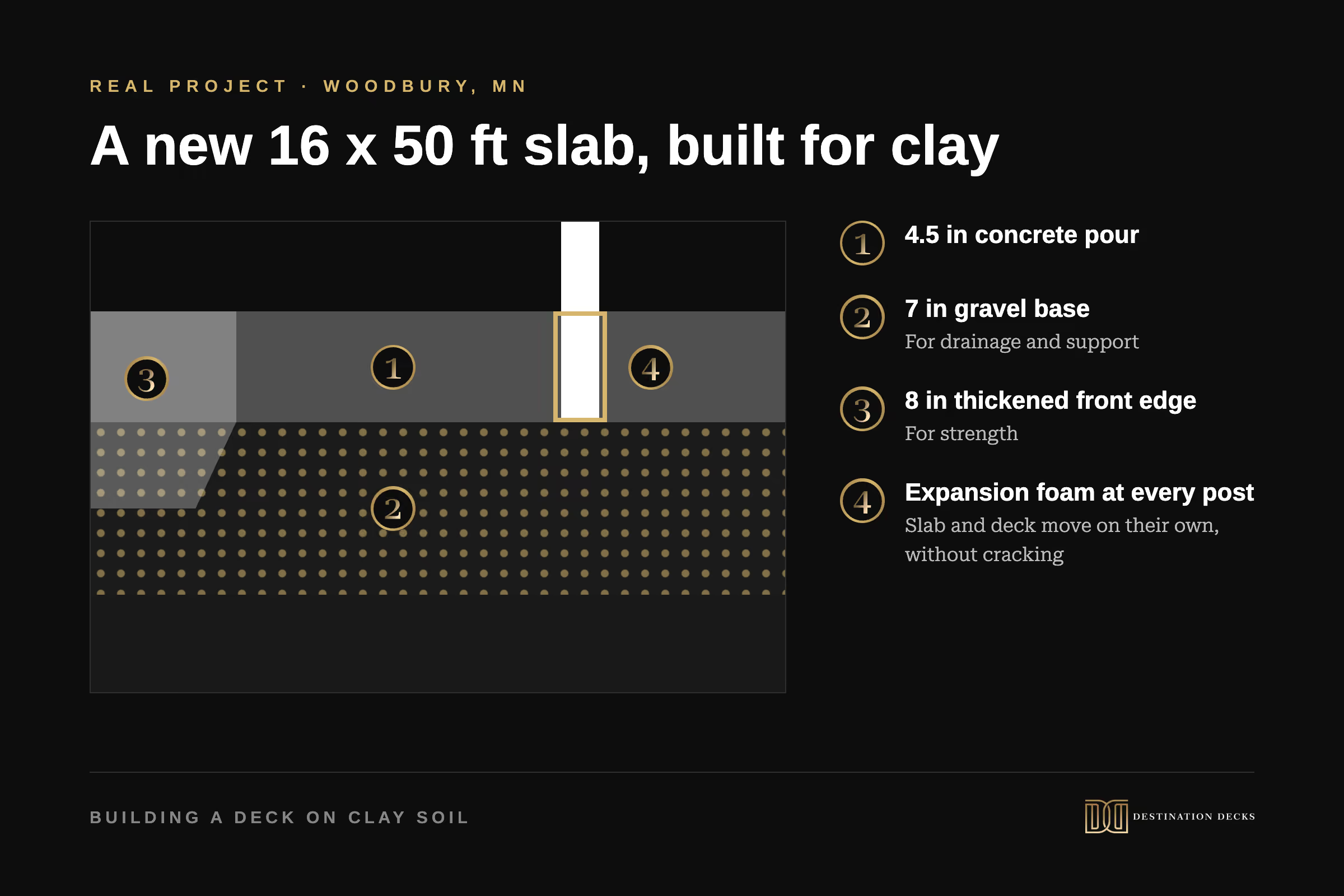
On this project, the helical crew set every pier right where it needed to be. We wrapped each post with expansion foam where it passes through the new concrete, so the slab and the deck can each move on their own without cracking.
Building the Slab to Last Too
Since the old slab had failed, we replaced it with a new 16x50 foot concrete pad built for this soil:
- A seven-inch gravel base for drainage and support
- About a four-and-a-half-inch concrete pour
- An eight-inch thickened edge along the front for strength
We also laid new sod where the helical rig and skid steers had driven in and out. The yard doesn't have to look like a construction zone when we leave.
The Payoff: A Dry, Usable Space Underneath
The deck above is TimberTech Prime+ composite in Sea Salt Gray, with white fascia, white post and beam wraps, and bottom skirts. Underneath, we're installing a Zip-UP under-deck system that turns the whole patio into a dry space.
That opens up a lot. A hot tub. A fire table you can use when it's raining. A place to store furniture over winter that stays dry when everything thaws.
Know Your Soil Before You Build

If your yard has sinking concrete, standing water, or clay you can feel when you dig, the footings are the most important decision in your whole project. Ask any builder you talk to how they plan to handle it.
We build on helical piers because we build for Twin Cities ground. Call Cole at (651) 661-4407 or request a consultation.
Planning concrete under your deck too? See how we sequenced this same project in planning a patio under your deck.